
Q&A - At Qualicum Beach's Only Traffic Light
 The issue is our only traffic light up town by Qualicum Foods. Perhaps I’ve misunderstood the rules of the road at intersections, but I thought if someone was at the intersection waiting to turn left that you (if you are approaching behind them) should let them make their turn and not pass on the right and travel through the intersection cutting off vehicles that may be turning left from the other direction?
 The
The 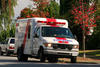 When you need the services of firefighters or paramedics seconds can seem like hours. Sooner is always better in situations like this so some traffic lights are equipped with sensors that listen for sirens and change the signals to
  Question: I am driving westbound on Moscrop Street, approaching the intersection with Willingdon Avenue in Burnaby. The signal changed to a yellow light and I decided that I was past the point of no return so I did not brake. A driver coming toward me decided to turn left and we collided. ICBC has found me to be partly at fault.
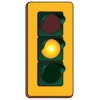 I was recently issued a ticket for failure to stop at a yellow light at an intersection. I am a class 2 bus operator and given the total stopping time of my class 2 vehicle (perception/reaction/actual braking time) and the fact I had a elderly person seated at the front on my bus, I thought it would be unsafe to either try and make a smooth controlled stop (which would have left the bus past the stop line) or make a sudden stop (possibly causing the elderly passenger to leave her seat).
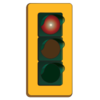 Question: I remember reading in one of the Courtenay newspapers where someone from the City of Courtenay advised that they were changing the timing of the traffic lights in intersections. The change was from (possibly) a half second to a full second – meaning all the lights would be red for this amount of time.
 During one of my Elder College presentations I work through a module on traffic signs and lane markings with the students. Driving examiners tell me that this is one area that older drivers have trouble with if they are called in for a re-examination. Based on discussions in the forum on the DriveSmartBC web site I can truthfully say that older drivers are not the only ones having difficulty with signs.