
A Driving Record Is Not a Road Test
 On October 19, 2026, British Columbia will change how new drivers progress through the Graduated Licensing Program (GLP). The second road test will be eliminated and replaced with a Driving Record Assessment. Drivers who qualify can upgrade to a Class 5 licence with restrictions, including a zero blood-alcohol and zero blood-drug-content restriction for 12 months.
 Question: How far can the tread of a tire extend beyond the fenders of a vehicle in British Columbia before it becomes a violation? The Motor Vehicle Act Regulations address mudguards, while the vehicle inspection standards specify when fenders and mudflaps are required. There are also exemptions for certain antique and collector vehicles.
 A September 2026 distracted-driving enforcement campaign in British Columbia prompted a DriveSmartBC visitor to question whether police should do more to educate drivers rather than simply issue tickets.
 Road safety affects everyone who uses British Columbia's roads. During an election campaign, voters should be able to find out what the parties seeking to form government intend to do to prevent collisions and reduce deaths and serious injuries.
 Drivers sometimes enter roundabouts without yielding, signal incorrectly or travel in the wrong direction. Knowing how to use a roundabout safely is an important part of being a responsible driver. Traffic patterns and road designs change, so it is worth reviewing the rules and refreshing your driving skills from time to time.
 A sidewalk may be present, but that does not necessarily mean everyone can use it easily or safely. Uneven pavement, loose gravel, narrow passages, poles, overgrown vegetation and difficult road crossings can make an ordinary walk challenging for someone using a walker, wheelchair, cane or mobility scooter.
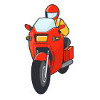 Motorcycle lane filtering is the practice of riding between lanes of stopped or slow-moving traffic travelling in the same direction. Supporters argue that it can reduce delays and help motorcyclists avoid being struck from behind. Critics worry that drivers may not expect a motorcycle to pass between vehicles and could move into its path while changing lanes or turning.
 An emergency vehicle's flashing lights and siren do not give its driver an unrestricted right to disregard the rules of the road. British Columbia's Motor Vehicle Act permits certain driving privileges in defined circumstances, but the driver must have a proper justification for exercising them and must continue to drive with due regard for safety.
 Buying an older motorcycle or other vehicle without registration papers can create a problem when you want to put it on the road. The previous owner may have lost the documents, the vehicle may never have been registered in British Columbia, or its registration history may be unclear.