
I was recently told a story about a driver who stopped at an intersection and, while checking for cross traffic, was surprised to see a pickup truck lying on its driver's side a short distance away. The driver assessed the situation and concluded that the rollover had happened only moments earlier. Several people had stopped to help, and it appeared that the driver of the pickup was out of the vehicle, shaken but apparently uninjured. Satisfied that assistance was already being provided, our driver turned right and continued on his way.
As he accelerated, he noticed another vehicle rapidly overtaking him. Its headlights were flashing, and its driver was gesticulating wildly. When the overtaking driver began following closely and continued flashing the headlights, he decided that discretion was the better part of valour and pulled over to let the vehicle pass.
The agitated driver sped away and, within a couple of blocks, turned into the fire department parking lot. He was a volunteer firefighter responding to the pickup rollover as a medical first responder.
Unfortunately, he was driving his personal vehicle as though it were an emergency vehicle responding to a call. His urgency was understandable, but his driving created an unnecessary risk for everyone around him. The driver he overtook had no way of knowing why he was behaving that way, and other road users should not have to guess whether an impatient or aggressive driver is responding to an emergency.
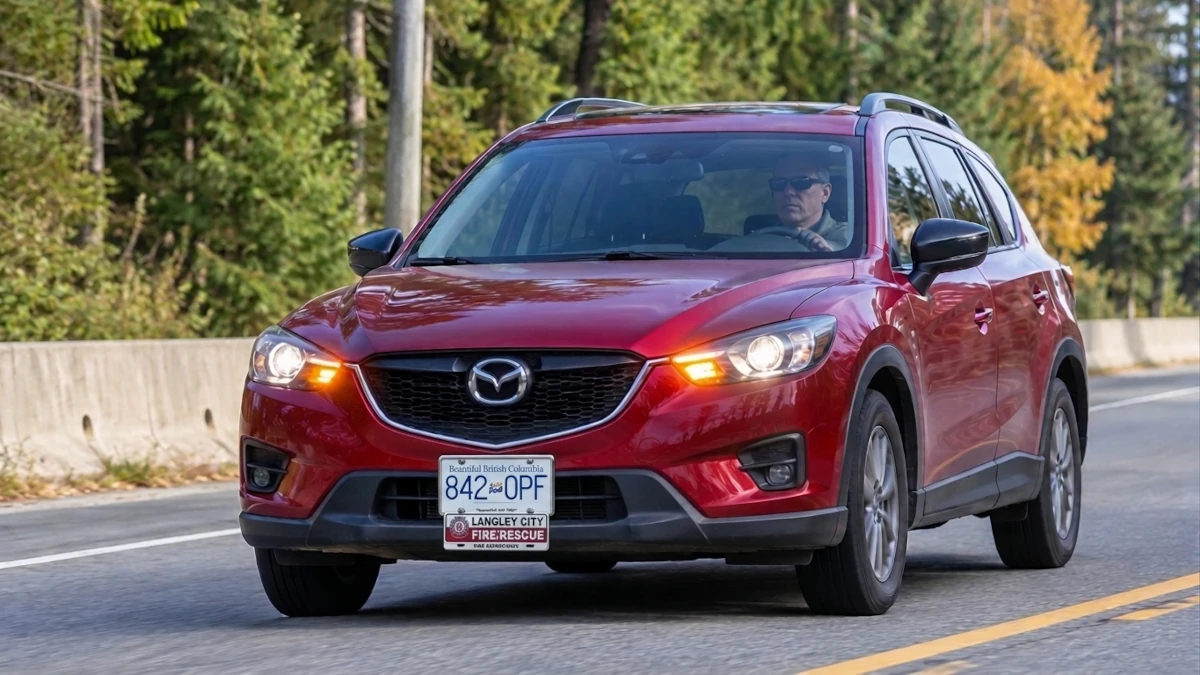
What Does the Law Allow?
British Columbia's Motor Vehicle Act defines an emergency vehicle to include a motor vehicle driven by a member of a fire department in the discharge of their duties. This means that a firefighter's personal vehicle may fall within the definition while the firefighter is performing those duties.
However, being included in the definition does not mean that a firefighter can simply disregard the rules of the road when responding to a call.
Section 122 of the Act provides certain privileges to drivers of emergency vehicles. These include exceeding the speed limit, proceeding through a red traffic signal or stop sign without stopping, and disregarding certain rules governing direction of travel and turning.
The Emergency Vehicle Driving Regulation establishes the conditions under which those privileges may be exercised by someone other than a peace officer. In general, the driver must operate an emergency light and siren when exercising privileges involving speed, traffic signals and direction of travel. An emergency light alone, or an emergency light and siren, is required when exercising the privilege of stopping or standing.
There is another important restriction. Section 122(4) requires a driver exercising these privileges to drive with due regard for safety, taking into account the circumstances, including the condition and use of the highway and the amount of traffic.
Flashing headlights, following another vehicle too closely or gesturing impatiently at its driver do not provide any special privileges. A firefighter responding in a personal vehicle without the required emergency equipment must obey the ordinary rules of the road.
Volunteer Firefighter Identification and Hazard Flashers
Some volunteer firefighters display a special identification plate or badge on their personal vehicles. These identifiers help other motorists recognize that the driver is a volunteer firefighter who may be responding to a call at the fire hall. They are a courtesy identification measure, not emergency equipment, and do not give the driver any special privileges under the Motor Vehicle Act.
If you recognize one of these vehicles and can safely make room for it, doing so may help the firefighter reach the fire hall sooner. However, the driver is still required to obey the ordinary rules of the road.
Some fire departments have adopted the practice of using vehicle four-way hazard flashers while responding to a call. For example, members of Bowen Island Fire Rescue have used them for this purpose. This practice should not be confused with the use of authorized emergency lights. Section 4.28(7) of the Motor Vehicle Act Regulations permits turn signals, or side-marker lamps used with turn signals, to be used as warning lights by slow-moving vehicles or vehicles disabled on a highway. It does not provide a general authorization for volunteer firefighters to use their four-way flashers as emergency warning lights while travelling to the fire hall.
Even when hazard flashers are operating, they do not give a driver the right to exceed the speed limit, disregard traffic signals or expect other motorists to yield as they would for an approaching emergency vehicle.
Getting There Safely Is Part of the Job
I admire firefighters and the work they do. Volunteer firefighters in particular make a significant commitment to their communities, often leaving their homes and workplaces at a moment's notice to help someone in need.
I also understand the urgency they feel when responding to an emergency. However, urgency does not make unsafe driving acceptable. The public, including the people who may need their assistance, should not be put at unnecessary risk by the way a responder travels to an incident.
Of course, the firefighter in this story may not have known that assistance was already being provided at the rollover. His concern was to get there as quickly as possible. But I wonder whether anyone had told him what I was told when I started my career as a police officer:
You can't help if you don't get there.
Learn More
- Log in to post comments