
Winter brings an additional responsibility before you drive: making sure your vehicle is completely clear of snow and ice. It is a task that takes a few minutes, but too many drivers seem willing to skip it, relying instead on their windshield wipers and defroster to clear just enough of the glass to see the road ahead.
That isn't sufficient. Snow and ice left on a vehicle can obstruct the driver's vision, interfere with vehicle equipment and create hazards for everyone else sharing the road.
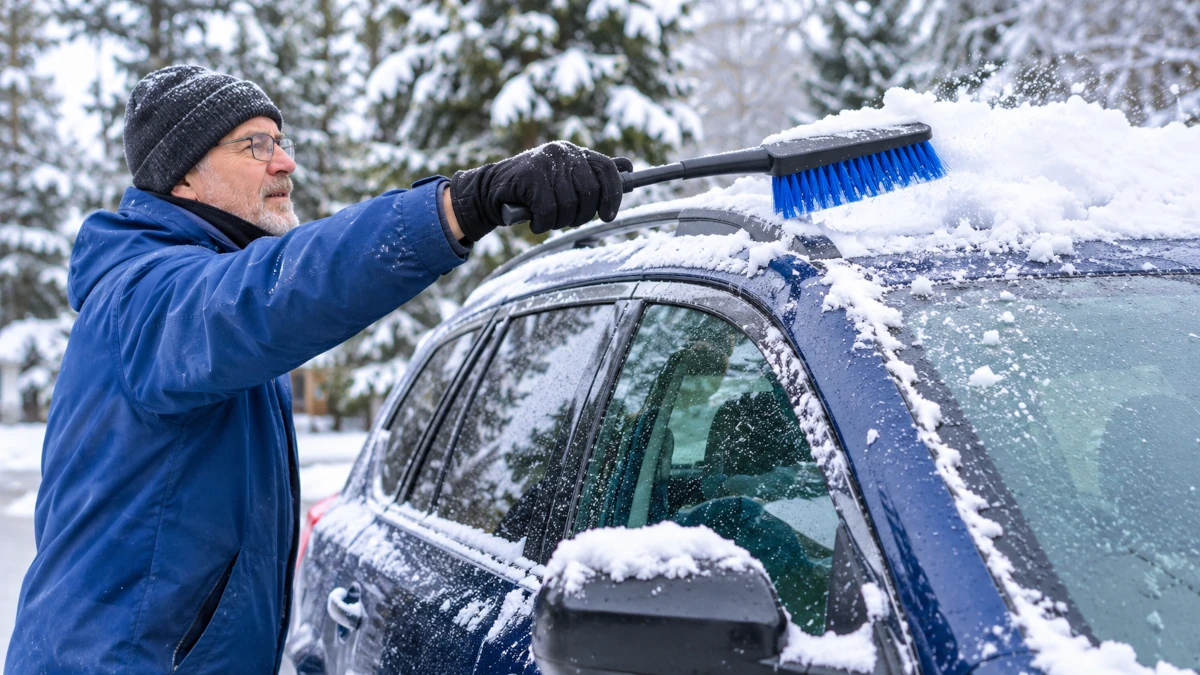
Clear All of Your Windows
Clear the entire windshield, all side windows and the rear window before driving. A small opening scraped through the frost or snow is not enough to give you a safe view of the road. Also make sure that interior condensation has cleared before you set out. Your vehicle's defroster can help, but allow it time to do its job.
Don't Forget the Rest of the Vehicle
Clearing the glass is only part of the job. Snow and ice should also be removed from the roof, hood, trunk and other exterior surfaces.
Snow left on the roof can blow off as you travel, creating a cloud that temporarily blinds following drivers. When temperatures are near freezing, snow can become a heavy, compacted mass. At highway speeds, or when you brake, large pieces can slide off and strike vehicles behind you.
Ice presents an even greater concern. A sheet of ice that breaks free can strike another vehicle's windshield, damage its bodywork or cause its driver to lose control while trying to avoid it.
This video demonstrates why clearing snow and ice from the roof of your vehicle matters. What appears to be harmless snow can become a dangerous projectile when it breaks free at highway speed.
Don't overlook your headlights, taillights, turn signals, licence plates and outside mirrors. Snow and ice can obscure lighting and make it difficult for other road users to see your intentions. Check that your windshield wipers are free to move and that snow hasn't accumulated around their resting position.
Modern Vehicles Have Additional Needs
Many newer vehicles use cameras, radar and other sensors to provide driver assistance features. Lane departure warnings, automatic emergency braking, adaptive cruise control and parking assistance may all depend on sensors located around the vehicle.
A camera mounted behind the windshield needs a clear view through the glass. Other sensors may be located in the grille, bumpers or around the vehicle. Snow, ice and road grime can interfere with their operation.
Check the owner's manual to find the location of these sensors and the manufacturer's instructions for keeping them clean. Avoid scraping or applying cleaning products to sensor surfaces unless the manufacturer recommends it.
Prepare Before Winter Arrives
A little preparation can make clearing your vehicle easier on a cold winter morning.
- Keep a suitable snow brush and ice scraper in the vehicle.
- Make sure the windshield washer reservoir contains winter-rated washer fluid.
- Check that your wiper blades are in good condition and replace them if they leave streaks or fail to clear the glass properly.
- Consider a windshield cover to reduce frost and ice accumulation overnight.
- Allow sufficient time for your vehicle's defrosters to clear interior condensation and fog.
A commercial windshield de-icer can also help with stubborn frost. Follow the product instructions and make sure the glass is suitable for the product being used.
Remote starting and interior heaters can make the job more comfortable, but they don't remove the responsibility to inspect and clear the vehicle before driving away.
What Does the Law Require?
Section 7.05(1) of the Motor Vehicle Act Regulations says that a person must not drive or operate a motor vehicle on a highway if the windshield or any window is in a condition that impairs the driver's vision.
This is a practical requirement, not simply a matter of convenience. A driver who cannot see properly cannot respond safely to traffic, pedestrians, cyclists and other hazards.
The regulations also require lamps and reflectors to be maintained so that they are not shielded, covered or obscured by the vehicle, its load, dirt or other material. This requirement is found in section 4.04(2)(c).
A Few Minutes Can Make a Difference
I've heard the usual excuses: it's only a short trip, the snow will blow off, or there isn't time to clean the vehicle properly. None of them makes the practice safe.
A collision caused by a sheet of ice coming off a vehicle can happen in an instant. A driver following you may have no opportunity to avoid it. Even loose snow can temporarily obscure another driver's vision at a particularly inconvenient moment.
Take the time to brush, scrape and defrost before leaving. Clear the entire vehicle, not just the portion immediately in front of the driver's seat.
Your responsibility for safe driving begins before you put the vehicle in gear.
Learn More
- Log in to post comments
Comments
Roof ice/snow blowing off really bugs me.
What happens is any snow on your roof slides forward and all of a sudden you can find your windscreen entirely covered, especially when the snow is wet and heavy and melting against your roof. And it may be too heavy for your wipers to clear.
- Log in to post comments
Cleaning the Roof