
Should cyclists be using the streets in winter?
That question arose when uncleared pathways and cycling routes in one Vancouver Island municipality forced cyclists to use ploughed streets instead. It is a reasonable question, particularly when snow and ice make cycling more difficult for everyone.
The short answer is yes. Cyclists have the same general rights and duties as drivers of motor vehicles when using British Columbia highways. Those rights don't disappear when winter arrives.
However, winter conditions create special challenges for cyclists and motorists alike. Understanding those challenges can make sharing the road safer.
The Right to Use the Road
Section 183 of the Motor Vehicle Act sets out the rights and duties of bicycle riders in British Columbia. A person operating a cycle on a highway has the same rights and duties as a driver of a vehicle, subject to the specific requirements applying to cyclists.
One of those requirements is to ride as near as practicable to the right side of the highway. The Act does not require cyclists to ride on an unpaved portion of the highway.
Winter conditions can make deciding where it is practicable to ride more complicated.
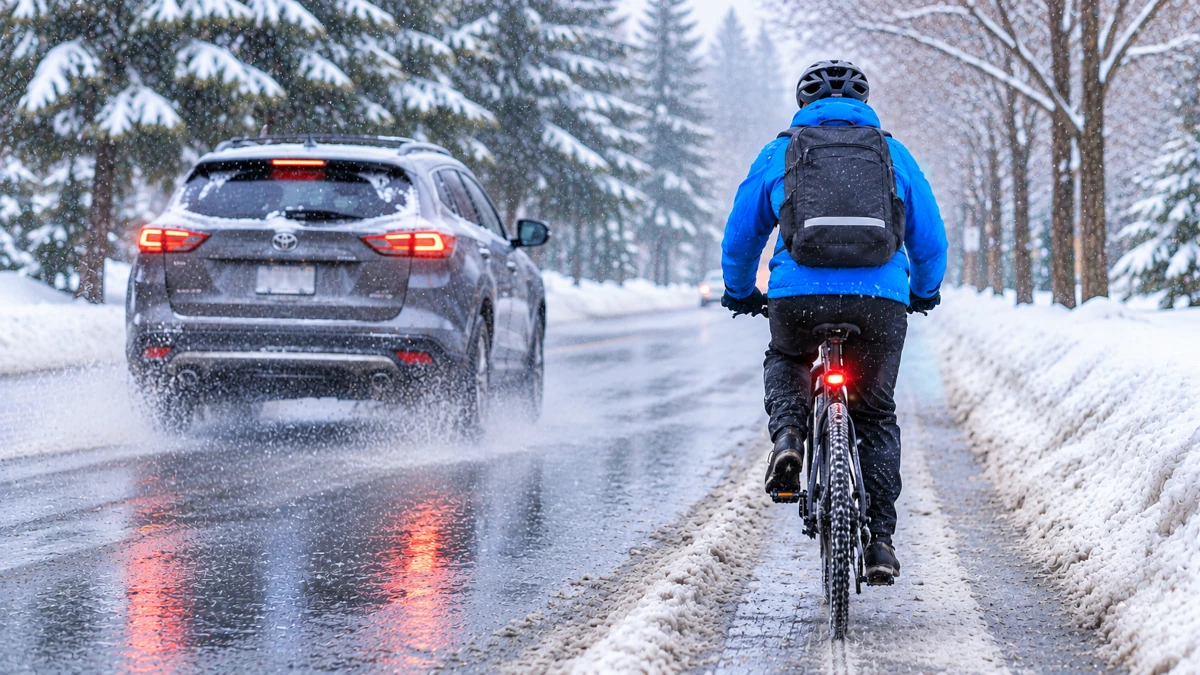
Snowbanks, accumulated slush, ice, potholes and other hazards may make the extreme right side of the roadway unsuitable. A cyclist may need to move farther into the travel lane to avoid these hazards and maintain control.
On a snow-covered road, the cleared track left by vehicle traffic may provide a more suitable riding surface. However, cyclists may need to change their position as conditions change.
Motorists should recognize that a cyclist's position on the road may not always be the same as it would be in summer.
Preparing for Winter Cycling
Winter riding calls for equipment suited to the conditions. Wider tires can provide better flotation on loose snow, while more aggressive tread may improve traction on some winter surfaces. Studded tires are available for cyclists who regularly encounter icy conditions.
Reducing tire pressure within the manufacturer's recommended range can increase the area of tire in contact with the riding surface. Excessively low pressure, however, can increase the likelihood of punctures and damage to the tire or rim.
Check that the brakes are properly adjusted and in good working order. Section 183(8) of the Motor Vehicle Act requires a bicycle operated on a highway to have a brake capable of making the braked wheel skid on dry, level and clean pavement.
High-visibility clothing and reflective accessories can help make cyclists more conspicuous to motorists, particularly in winter when daylight hours are shorter and road spray or precipitation can reduce visibility.
Lights and Visibility
Winter brings shorter days and more frequent periods of poor visibility.
Section 183(6) of the Motor Vehicle Act requires a bicycle operated on a highway between half an hour after sunset and half an hour before sunrise to have:
- A white front light capable of being seen for at least 150 metres under normal atmospheric conditions.
- A red rear reflector.
- A lighted rear lamp displaying a red light.
Using lights during daylight in poor weather is also sensible. Keep lights and reflectors clean and make sure they aren't obstructed by clothing or equipment.
Keep lights and reflectors clean and make sure they aren't obstructed by clothing or equipment.
Riding in Snow and Ice
The most important adjustment a cyclist can make in winter is to recognize that traction and stopping distance can change considerably over a short distance.
Snow can conceal potholes, pavement defects and other hazards. Packed snow and ice can make steering and braking unpredictable.
Black ice is particularly troublesome because it can be difficult to distinguish from wet pavement. Bridges, shaded areas and places where water collects may be especially hazardous.
Reduce speed when conditions deteriorate. Avoid sudden acceleration, hard braking and abrupt steering movements. Make turns gradually and avoid leaning the bicycle excessively when traction is uncertain.
Allow more time and distance to stop than you would on dry pavement. Reduce speed before entering a corner rather than trying to brake sharply while turning.
Slush creates another problem. It can be difficult to ride through, may conceal hazards beneath its surface and can accumulate around the bicycle's moving components.
Painted pavement markings, metal sewer grates and railway tracks can also become slippery when wet or icy. Take particular care when crossing them. Where possible, cross railway tracks at right angles rather than allowing the bicycle wheels to follow the direction of the rails.
If the surface is too slippery to maintain control, walking the bicycle may be the safer choice.
Sharing the Road in Winter
Winter conditions make it more difficult for motorists to see cyclists. Darkness, precipitation, road spray and dirty vehicle windows all contribute to the problem.
Cyclists should ride predictably, signal their intentions and avoid lingering in vehicle blind spots.
Motorists should anticipate encountering cyclists even when winter conditions make them less common. Particular attention is needed at intersections, when turning across bicycle routes and when entering a roadway from a driveway or parking space.
Snowbanks and accumulated slush may force cyclists to ride farther into the roadway. Motorists should allow for this possibility rather than assuming that a cyclist will always be riding immediately beside the curb.
If snow or ice makes it unsafe to pass, wait until there is sufficient room to do so safely. The legal requirements for passing cyclists and other vulnerable road users are discussed in Following and Passing Vulnerable Road Users in B.C.
Cyclists should also stay clear of snowploughs and other road maintenance vehicles. Their operators have blind spots, and the vehicles may make unexpected movements while clearing snow.
Keeping Cycling Routes Usable
Winter cycling safety isn't entirely the responsibility of the cyclist. Municipalities also influence whether people can use bicycles safely by maintaining cycling infrastructure during winter.
A bicycle route covered by snow or blocked by snowbanks may be unusable even when the adjacent roadway has been cleared.
Where municipalities intend cycling routes to be used year-round, snow clearing and maintenance need to be considered as part of that commitment. When pathways and cycling routes aren't maintained, cyclists may have little choice but to use the roadway.
Knowing When to Leave the Bicycle at Home
Having the right to ride a bicycle on the highway doesn't mean that doing so is always a sensible decision.
Heavy snowfall, freezing rain, severe wind, poor visibility and icy road surfaces can make cycling unnecessarily hazardous. Even a properly equipped bicycle cannot compensate for a complete lack of traction or an inability to see and be seen.
Plan routes in advance, check weather and road conditions, allow additional travel time and have another means of transportation available.
Winter cycling can be a practical way to travel, but good judgement is as important as good equipment. Sometimes the safest decision is to leave the bicycle at home.
- Log in to post comments
Comments
When the weather gets really bad, not only does cycling become more dangerous, it also becomes much slower. It's not just the time cycling it is also the time at either end of the trip to gear up and gear off. Not to mention all of the extra maintenance you need to do to keep the bike running.
- Log in to post comments
When not to ride