
Xavier's Law and Reckless Driving: What Has Changed?
 On August 25, 2025, Shawnigan Lake R.C.M.P. were called to a fatal collision involving 12-year-old Xavier Rasul-Jankovics, who had been rollerblading on the road. He was struck and killed by a passing 17-year-old driver travelling at high speed. After striking Xavier, the driver collided with a utility pole, injuring both occupants of the car. This is the start of the story that resulted in the creation of Xavier's Law.
 Have you witnessed dangerous, aggressive or careless driving and wondered whether reporting it to police would accomplish anything? The answer is yes, but the success of your complaint depends largely on the information you can provide and how involved you are willing to become in the investigation.
 Drivers sometimes have only seconds to react when another vehicle does something unexpected. In that moment, the safest option may not be obvious. But if your split-second decision results in a traffic violation, will the courts excuse it because you were trying to avoid a collision?
 Our lap dog loves to go for car rides! She's generous too because you are more than welcome to sit underneath her in the right front seat. The trouble is, this is definitely not a good place for pets to ride in the car today.
 Have you ever found yourself trailing a large commercial transport truck on a British Columbia highway and felt an overwhelming urge to get around it? It is a common psychological reaction for passenger vehicle drivers. We don't like being slowed down but the maneuver that happens next is often one of the most dangerous actions on our roads: passing the truck, immediately cutting back into its lane, and then slowing down.
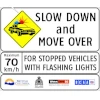 B.C.'s slow down move over law is now more than 15 years old. Many drivers continue to fail to slow down and move over when possible, putting the safety of roadside workers at unnecessary risk. A BCAA survey suggests that 70% of drivers are still unsure of what to do.
 The "Me First!" driver is one whose default attitude is competition rather than cooperation. Their sense of entitlement leads to prioritizing personal convenience over safety. High risk driving behaviours are commonly chosen to accomplish their desire to get ahead and that increases the chance of a collision with the other drivers around them.
 Heading out to collect some firewood for the winter this weekend? Fall was always a good time to watch for pickup trucks with pyramids of firewood in the back on our highways. When checked they were often illegal, and unsafe, in three ways: unsecured load, overweight and a danger to vehicle occupants if the pickup was involved in a collision.