
CASE LAW - R v Brownson
- Read more about CASE LAW - R v Brownson
- Log in to post comments
 Nadia Brownson was driving her pickup truck on First Avenue, within a 50 km/h speed zone, in Prince George on a rainy, autumn night. Scotty Bryan and Tony Shubert had been dropped off near the Dominion Street intersection and were crossing First Avenue from north to south near a nightclub. They saw Ms. Brownson approaching but thought that they had sufficient time to cross.
 This is a story from Chestnut Street in Parksville, but could just as easily take place on any residential street in British Columbia. It appears that both the residents there and the City Council are upset about speeding in the neighbourhood. What no one seemed to agree on was what to do about it beyond asking police to do enforcement and perhaps posting the speed limit at 40 km/h.
 Quoted from the YouTube video page: Our speed is one of the few things we control on the roads. While speed doesn’t always cause crashes, it always determines the severity of a crash. This is because the speed we travel at creates a force and it’s our vehicle and our bodies that absorb this force in a crash. This means the faster we choose to travel, the more severe a crash will be (whether the crash is our fault or not).
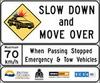 I’m a professional driver on the Island,I have been driving since the mid 60s and have logged many accident free kms. My interest in writing is the “slow down, move over law." I have done it for decades. Not enough drivers seem to be aware of it.
 We travel the Coquihalla (Highway 5) from Hope to Kamloops twice each year. We are concerned about the increase in the speed limit from 110 to 120 km/h. Many of the drivers go well above that limit which causes dangerous conditions. We are concerned for our safety.
 I have been a property owner in Mirror Lake BC for over 5 years & have yet to see any speeding related citations being created here. Hwy 31 at Mirror lake is posted 50 kmh but rarely see anyone obeying the speed limit.
 I would like to tackle a subject that might be a bit odd for DriveSmartBC but the consequences could be related back to safety. I’m thinking about travel speed and fuel economy because the faster you go, the more it costs, probably in more ways than one. Slow down and save.
 Love 'em or hate 'em, speed enforcement cameras save lives. This review of the evidence of the British experience with speed camera enforcement shows that camera use results in a substantial improvement in compliance with speed limits, a particular reduction in extreme speeding, a marked reduction in average speed at fixed sites and an appreciable, though more modest, reduction at mobile sites.
 Question: What advice do you have when driving in heavy traffic that is averaging 25 to 30 km/h over the posted speed limit? I was crossing Lake Okanagan bridge a few days ago in the right lane and if I went 15 to 20 km/h over the posted 60 km/h limit I was still the slowest vehicle there.