
When residents become concerned about speeding in their neighbourhood, one suggestion almost always comes up: "Why doesn't the city install speed bumps?" It seems like a simple, inexpensive solution.
It's an understandable reaction. Residents experience the effects of speeding every day, while traffic engineers must balance those concerns with emergency access, transit buses, road maintenance and the movement of traffic through the community.
The type of raised pavement device matters. Traffic engineers choose from several different traffic calming measures based on the purpose of the road, traffic volumes, transit routes, emergency vehicle access and the safety problems they are trying to solve.
Understanding the differences explains why the answer isn't always as straightforward as it appears.
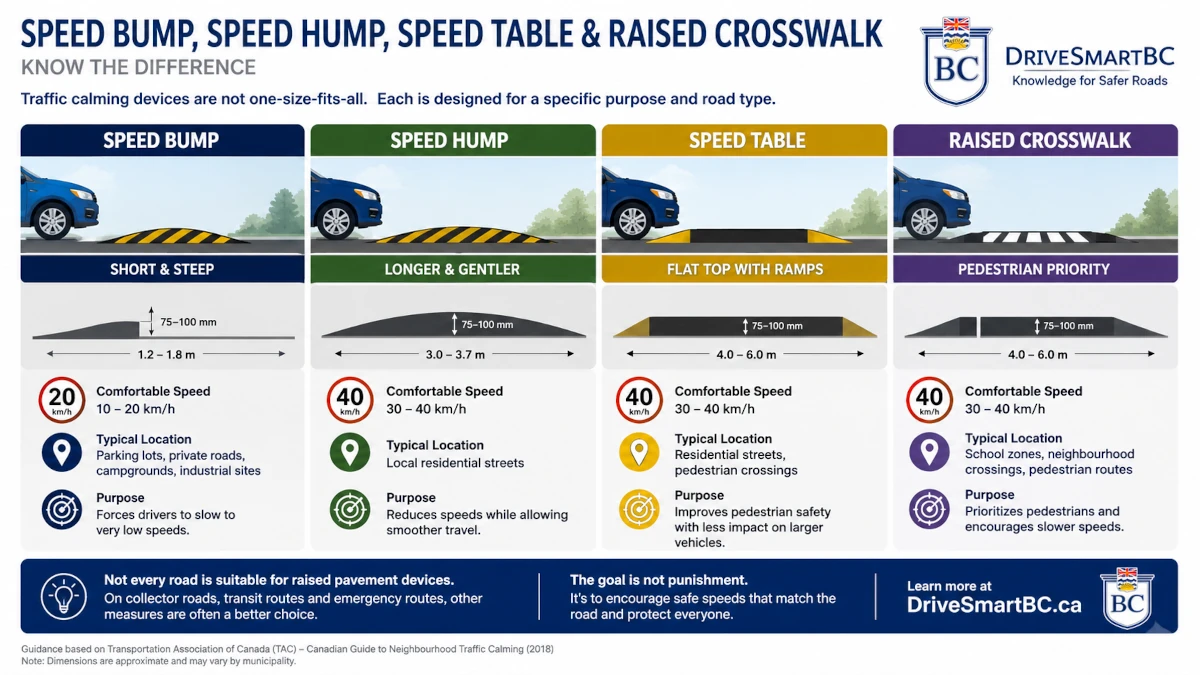
The illustration above shows why these devices are not interchangeable. Although they all encourage slower speeds, each one is designed for a different operating environment.
Not All Raised Pavement Devices Are Speed Bumps
Many people use the term speed bump to describe any raised section of pavement intended to slow vehicles. In traffic engineering, however, speed bumps, speed humps and speed tables are different devices designed for different situations.
Speed Bumps
Speed bumps are the shortest and steepest of the three. They are designed to force drivers to slow to approximately 10 to 20 km/h if they want a comfortable ride.
Because they create a relatively abrupt vertical movement, speed bumps are most commonly used on:
- Parking lots
- Private roads
- Campgrounds
- Industrial sites
- Areas where walking speeds are expected
Their purpose is simple: make driving too fast uncomfortable.
Speed Humps
Speed humps are much longer and have a gentler profile. Drivers can comfortably cross them at approximately 30 to 40 km/h, making them suitable for many local residential streets.
When most people refer to speed bumps on neighbourhood streets, they are actually thinking of speed humps.
Speed Tables
A speed table has a flat top with gradual ramps on each side. Many raised pedestrian crossings are speed tables.
Because the flat surface is easier for larger vehicles to cross, speed tables can improve pedestrian safety while creating less discomfort for buses, emergency vehicles and cyclists than a traditional speed bump.
Why the Type of Road Matters
This is where the function of the road becomes important.
Local residential streets are designed primarily to provide access to homes. Collector roads have a different job. They gather traffic from neighbourhood streets and move it toward arterial roads while still providing access to homes, schools and businesses.
Collector roads often carry:
- Higher traffic volumes
- Transit buses
- Emergency vehicles
- Commercial vehicles
- Cyclists
Installing vertical traffic calming devices on these roads can create unintended consequences, including:
- Longer emergency response times
- Reduced passenger comfort on buses
- Additional braking and acceleration noise
- Higher fuel consumption and vehicle emissions
- Increased maintenance costs
- Complications for snow removal operations
That doesn't mean speeding concerns are ignored. It means engineers look for solutions that improve safety without interfering with the road's transportation function. In British Columbia, they typically use engineering guidelines and traffic studies to determine whether traffic calming measures are appropriate and which type is best suited to a particular street.
Other Ways to Reduce Speeds
Depending on the location, municipalities may choose other traffic calming measures instead of raised pavement devices.
- Curb extensions
- Traffic circles
- Raised crosswalks
- Road narrowing
- Gateway treatments at neighbourhood entrances
- Speed feedback signs
- Improved lane markings
- Targeted enforcement
The goal is to encourage drivers to choose an appropriate speed while allowing the roadway to continue serving everyone who depends on it.
Why Not Just Lower the Speed Limit?
Simply changing the number on a speed limit sign does not necessarily change how fast people drive.
Traffic engineering research has shown that drivers tend to select speeds that feel comfortable for the road's design. If a road is wide, straight and open, many drivers will continue to travel faster than a lower posted speed unless the road itself is changed to encourage slower driving. Drivers subconsciously adjust their speed to match the appearance of the roadway. A wide, straight street encourages higher speeds than a narrower street with curves, trees or other visual features that signal caution.
That is why modern traffic calming focuses on designing roads that naturally encourage appropriate speeds instead of relying solely on enforcement or lower speed limits.
The Bottom Line
Speed bumps, speed humps and speed tables are all effective traffic calming devices when used in the right location. Choosing the wrong device—or installing it on the wrong type of road—can create new problems while doing little to address the original concern.
On public streets—particularly collector roads—traffic engineers often choose other traffic calming measures that improve safety while allowing the road to continue serving buses, emergency vehicles and the travelling public.
| Device | Comfortable Speed | Typical Location |
|---|---|---|
| Speed Bump | 10–20 km/h | Parking lots, private roads |
| Speed Hump | 30–40 km/h | Local residential streets |
| Speed Table | 30–40 km/h | Residential streets, pedestrian crossings |
Learn More About Traffic Calming
- Traffic Calming in Your Neighbourhood
- Using Stop Signs to Control Speed
- Citizen Led Traffic Calming
- Traffic Calming and Emergency Vehicles
Did you find this article helpful? Please consider sharing it using the buttons below. It helps others better understand how traffic calming works and why one solution doesn't fit every street.
- Log in to post comments