
Passing a Long Vehicle Turning Right
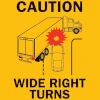 A long vehicle turning right can create a confusing situation for the driver following it. The vehicle may move to the left before beginning the turn, apparently leaving room to pass on the right. Is passing actually allowed?
 Siegrist v. Wiens is a British Columbia Supreme Court decision about a collision that happened when a farm tractor towing a hay wagon turned right while a car was passing it on Highway 1 near Canoe.
 According to the
  Question: I was asked about not crossing a double solid yellow line when driving. Two friends were talking about it and thought there had been an update made to the laws that allowed a driver to cross a double line under certain circumstances. Was this true?
 Deliberately bad drivers seem to be appearing more and more often on our highways. If e-mail to this web site is any indication, other drivers are no longer shrugging it off and report offenders in the hope that they will be held accountable. Some have taken to posting photos or video of selfish, inconsiderate or dangerous drivers in that hope that public shaming might improve that driver's behaviour.
 Sharing the road with aggressive or unsafe drivers can be both upsetting and dangerous. One common hazard is being involved in an unsafe pass, whether it's on a two-lane highway, during heavy traffic, or in poor weather conditions. Staying calm and making smart, defensive choices in these situations can help you stay safe and avoid being part of a crash.
 Why, oh why, when there are literally kilometres of unused pavement in sight, does the driver of the vehicle passing me have to make a lane change to the right and put their car within about 3 vehicle lengths of my front bumper?
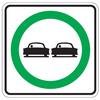 Passing zones always presented interesting situations for traffic enforcement. There were many times when I would find one driver in the right lane travelling at or near the speed limit and another overtaking on the left at a speed significantly in excess of that limit.
 I have a concern about the road between Port Alberni and the West Coast. When they redid the slow vehicle pullouts, they dressed them up to look exactly like passing lanes. Now everyone travels in those lanes. The only difference between the pullouts and passing lanes is that the pullouts don't have signs telling drivers that the lane is ending (why would it, it's not a travel or a passing lane - it's a slow vehicle pullout).