
According to the Association of School Transportation Services of British Columbia, travel by school bus is statistically the safest method of ground transportation in Canada and by a substantial margin. We all expect and demand nothing less when our children and grandchildren are riding those buses to and from school and school-related events.
Yet drivers still pass stopped school buses, putting children at risk. When a school bus is stopped to load or unload students, take the warning seriously and be prepared to stop.
Drivers Don't Stop for the School Bus
CTV News rode along in a Surrey school bus and recorded many drivers who did not even slow as they passed by the bus while it was in the process of unloading students at the end of a school day. They also interviewed one driver who became very emotional as he described a near miss when he was dropping off two little girls.
Drivers Must Stop for the School Bus
Section 149 of the Motor Vehicle Act requires the driver of a vehicle to stop when meeting or overtaking a designated school bus that is stopped on a highway and has a sign or signal displayed indicating that it is receiving or discharging school children.
You must stop before reaching the bus and must not proceed until the bus resumes motion or the bus driver signals that it is safe to proceed.
The requirement applies whether you are approaching the bus from the front or the rear. It also applies regardless of which lane you are travelling in.
The Act does not say that the school bus must be stopped in a traffic lane. It says that the bus must be stopped on a highway. If a school bus is stopped in a parking lane, pullout or other area that forms part of the highway while receiving or discharging students, don't assume that you can simply drive past it.
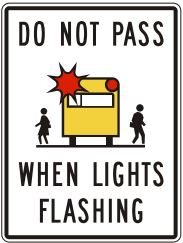
A traffic ticket for failing to stop for a school bus includes a fine of $368 and 3 penalty points.
ICBC's contraventions data recorded 225 tickets for failing to stop for a school bus in 2025, compared with 150 in 2024.
Flashing Lights
School buses are equipped with alternating flashing red and amber lamps. The school bus driver may activate the alternating flashing lamps or the stop arm when the bus is stopping or stopped to load or unload passengers.
If the driver activates the alternating flashing lamps, the Motor Vehicle Act Regulations require that they be activated in sufficient time to give reasonable warning to drivers who are required to stop and throughout the entire process of loading or unloading students.
In practical terms, flashing amber lights are a warning that the bus is preparing to stop. When the bus is stopped and the red lights and stop arm are displayed, drivers should stop and remain stopped until the bus resumes motion or the driver signals that it is safe to proceed.
Don't try to judge whether a child has already crossed the road or whether there is enough room to pass. Children can be unpredictable, and a child who has reached one side of the road may suddenly return to the bus.
No Time-of-Day Exception
The Motor Vehicle Act does not limit the school bus stopping requirement to school hours or regular school days. A school bus may be transporting students to or from a sporting event, field trip or other school-related activity at any hour.
If you encounter a stopped school bus that meets the requirements of section 149, stop. It does not matter whether it is 8 in the morning, 3 in the afternoon or 2 in the morning.
Video Surveillance
Some B.C. school districts use video cameras on the outside of their school buses to record drivers who fail to stop. The recordings can provide evidence for a police investigation and enforcement action.
Learn to Drive Smart
Our provincial driving manual Learn to Drive Smart (page 92) teaches drivers to stop when they see a school bus with alternating flashing red lights, whether they are approaching from the front or the rear. It also says that vehicles in all lanes must stop and that drivers must not move again until the bus moves on or the driver signals that it is safe to proceed.
Duty of Care for Children
Drivers must exercise proper precaution when encountering a child on any road, street or highway. This includes children walking to or from a school bus.
Children may run, change direction, become distracted or return to the bus unexpectedly. Give them the time and space they need to get safely out of the roadway.
Learn More
- Log in to post comments