
Question: I would like to use a 15-passenger van for a pleasure trip and am wondering if a Class 5 driver's licence is valid for this use. I have read that a Class 5 licence may be sufficient for personal use, but I'd like to confirm.
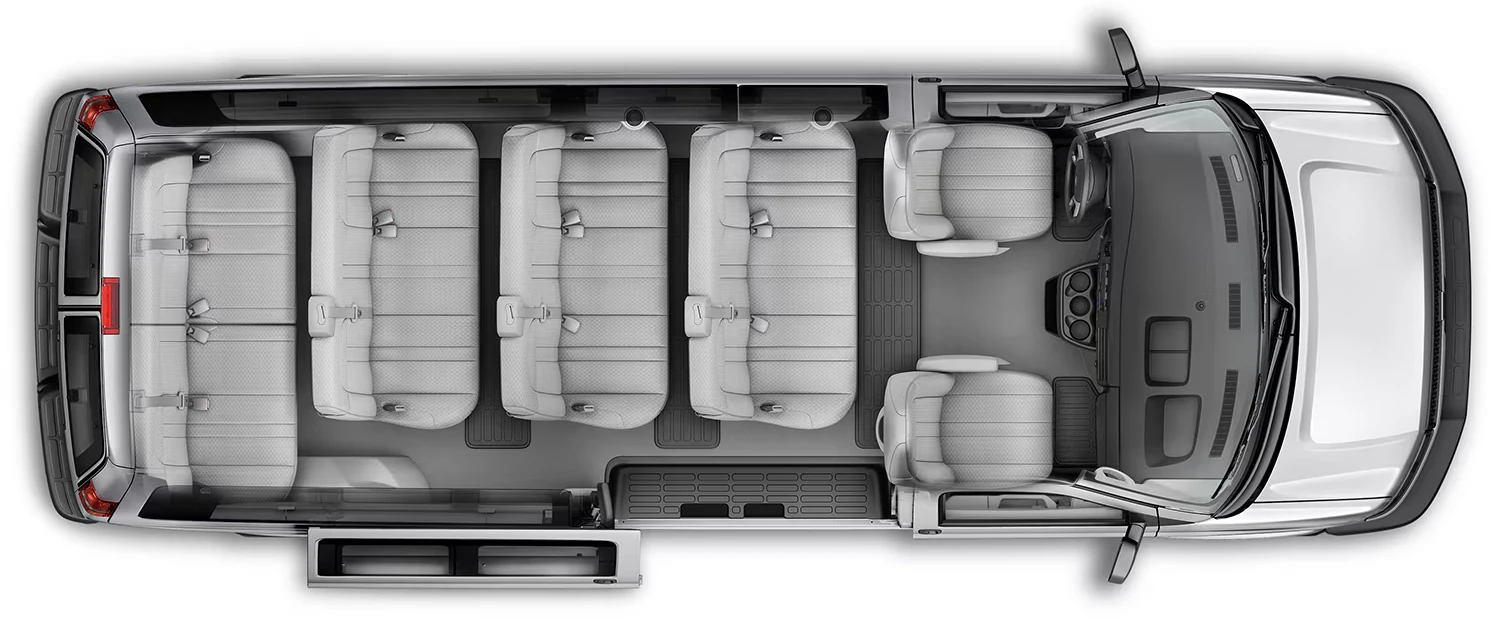
It depends on how the van is being used
The number of seats in a van does not, by itself, determine what driver's licence you need to drive it.
British Columbia's Motor Vehicle Act Regulations defines a bus as a motor vehicle with seating for more than 10 people, including the driver, that is operated for hire or for public transportation. See Division 30 of the Motor Vehicle Act Regulations.
That means a 15-passenger van meets the seating-capacity part of the definition, but it is not necessarily a bus for driver-licensing purposes. We also need to consider how the vehicle is being operated.
What is public transportation?
The regulations define public transportation as the transportation of a group of persons other than family members or associates.
This brings us to another definition that is particularly important when considering a 15-passenger van.
The regulations define associates as friends, acquaintances or invited persons who are not collectively members of a society, organized sport association, religious organization or other group with a common interest. See the definitions in Division 1 of the Motor Vehicle Act Regulations.
In practical terms, friends or acquaintances travelling together for a recreational outing can fall within the definition of associates. However, people who are travelling together as members of an organized group with a common interest are treated differently by the definition.
For example, members of a hockey team travelling together as a team are collectively members of an organized sport association. Similarly, members of a religious organization travelling together as a group may fall outside the definition of associates.
Why does that matter?
If the passengers are family members or associates and the van is being used for personal purposes rather than for hire, the vehicle does not become a bus simply because it has 15 seats.
If the vehicle is being used to transport a group of people who do not fall within the definition of family members or associates, the public-transportation part of the bus definition may apply.
There can also be other licensing requirements depending on the particular use of the vehicle. This is why it is risky to answer the question simply by saying that "a 15-passenger van requires a Class 4 licence" or that "a Class 5 licence is always sufficient for personal use."
A court case involving a 15-passenger van
This distinction has been considered in court.
In Melnikov v. Insurance Corporation of British Columbia, 2009 BCCA 566, the driver was involved in a collision while driving a 15-seat passenger van. ICBC denied his insurance claim, taking the position that the vehicle was a bus and that he did not have the required driver's licence. The B.C. Supreme Court dismissed his action and the B.C. Court of Appeal dismissed his appeal.
One of the issues raised in the litigation concerned whether the passengers were "associates" under the applicable regulations. After losing his appeal, Mr. Melnikov sought to have the Court of Appeal reconsider the case and raised additional arguments about the interpretation of "associates," including arguments based on the wording and punctuation of the regulation. The Court declined to reopen the case in Melnikov v. Insurance Corp. of British Columbia, 2010 BCCA 502.
The case is a useful reminder that the classification of a passenger van is more complicated than simply counting seats. It can also have consequences for insurance coverage.
What licence do I need?
If you are planning to take a 15-passenger van on a personal pleasure trip, don't assume that the number of seats automatically means you need a Class 4 licence.
Instead, consider who you are transporting and how the vehicle is being used.
Family members and associates are specifically excluded from the definition of public transportation. But an organized group such as a sports association, religious organization or another group with a common interest can be treated differently under the definition of associates.
If your proposed use does not fit clearly within these definitions, confirm the licensing requirements with ICBC before you make the trip. It is much better to establish that you have the proper licence before an incident occurs than to discover afterward that your licence was not sufficient.
What about a Class 7 licence?
A Class 7 licence does not change the answer. A Class 7 licence permits you to drive the same basic types of vehicles as a Class 5 licence, but with the restrictions that apply to a novice driver.
The question for a 15-passenger van is therefore not simply whether you hold a Class 5 or Class 7 licence. It is whether the van is a vehicle that requires a higher class of licence because of the way it is being used.
If the van meets the regulatory definition of a bus because it has seating for more than 10 people and is operated for hire or public transportation, a Class 7 or Class 5 licence is not sufficient. If it does not meet that definition, having 15 passenger seats does not, by itself, make a Class 7 or Class 5 licence insufficient.
A Class 7 driver must, of course, also comply with the restrictions and conditions that apply to a novice driver.
Learn More
- Log in to post comments