
A reader asked why daytime running lights (DRLs) are required on vehicles in Canada. He also wondered why there appeared to be little enforcement when vehicles that are supposed to have DRLs are being driven without them.
DRLs have been required on most new vehicles sold in Canada since December 1, 1989. But what exactly is a DRL, why is it required and what happens when it doesn't work?
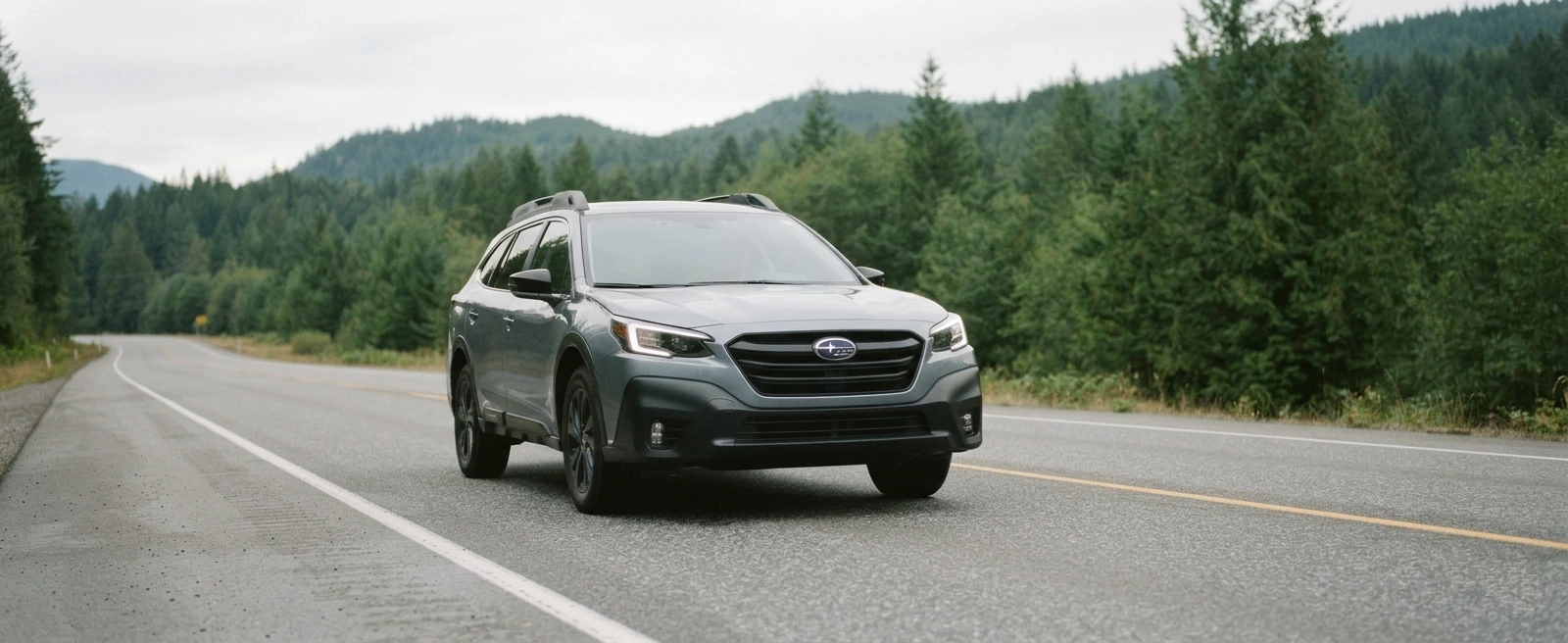
Why do we have daytime running lights?
DRLs are intended to make a vehicle easier for other road users to see during daylight. They are not primarily intended to illuminate the road for the driver.
Research conducted after Canada introduced mandatory DRLs found evidence that they reduce certain types of daytime collisions. A Transport Canada study found an 8.3% reduction in two-vehicle, opposing-direction daytime collisions associated with DRL use. Other Canadian studies found similar results, although the size of the benefit varied with the types of collisions examined.
More recent research using modern vehicles has continued to find a safety benefit. A 2023 Australian study found an 8.8% lower risk of involvement in non-night-time multi-vehicle casualty crashes where vehicle visibility could be a factor.
This does not mean that DRLs prevent collisions in general. The evidence supports the more specific conclusion that making a vehicle more conspicuous during daylight can reduce some types of collisions.
Read the Canadian research on DRLs and the more recent Australian research.
What counts as a daytime running light?
A DRL is a lighting function, not necessarily a separate lamp. Depending on the vehicle and the federal standard that applied when it was manufactured, DRLs can be provided by low-beam headlamps, high-beam headlamps operating at reduced brightness, dedicated DRLs or other permitted front lamps.
The federal standard also permits turn signal lamps to provide the DRL function. This explains why DRLs can look quite different from one vehicle to another.
What matters is whether the vehicle's lighting system complies with the federal requirements that applied when it was manufactured.
Transport Canada's Technical Standards Document 108 contains the current federal requirements for vehicle lighting.
Are daytime running lights required in B.C.?
Canada's federal Motor Vehicle Safety Regulations require passenger cars, multipurpose passenger vehicles, trucks, buses and three-wheeled vehicles manufactured for the Canadian market to meet the applicable DRL requirements. The requirement for new vehicles took effect on December 1, 1989.
B.C.'s Motor Vehicle Act Regulations address this through section 4.02(2):
A vehicle on a highway must be equipped with lamps equivalent to those provided by the original manufacturer in accordance with the requirements that applied under the Motor Vehicle Safety Act (Canada), or a predecessor to that Act, at the time of vehicle manufacture.
In other words, a vehicle manufactured when DRLs were required by the federal standard must retain that required lighting equipment when operated on a B.C. highway.
Section 4.08 separately says that a motor vehicle may be equipped with daytime running lamps that comply with the federal requirements. This applies to vehicles on which DRLs were not otherwise required; it does not override section 4.02(2).
Read Division 4 of B.C.'s Motor Vehicle Act Regulations.
What happens if the DRLs don't work?
If a vehicle is required to have DRLs under the federal standard that applied when it was manufactured, B.C. requires it to retain the required lighting equipment under section 4.02(2).
A violation can result in a repair order or a traffic ticket with a penalty of $109.
But how often is the provision enforced specifically because a vehicle's DRLs are not working?
How much enforcement is there?
I tried to answer that question by looking at available traffic ticket statistics from ICBC. The problem is that section 4.02(2) covers required vehicle lamps generally, rather than DRLs alone. The statistics therefore don't tell us how many violations involved daytime running lights.
ICBC's traffic violation statistics are available online, but they don't provide a separate DRL category.
One limitation of daytime running lights
DRLs are intended to make a vehicle more visible from the front during daylight. On some vehicles, however, the DRLs can be illuminated while the rear lights remain off.
This created what Transport Canada has described as “phantom vehicles”—vehicles that appeared to have their lights on from the front but could be difficult to see from behind in darkness or poor visibility.
Transport Canada subsequently changed the federal lighting requirements to address this problem. Newer vehicles must use systems designed to prevent drivers from travelling at night without their rear lights illuminated.
Transport Canada - Phantom Vehicles explains that change in more detail.
So, why do we have DRLs?
The reason is simple. A vehicle that is easier to see is less likely to be overlooked by another road user.
Canadian and international research provides evidence that DRLs reduce certain types of daytime multi-vehicle collisions. That is the safety rationale for requiring them on new vehicles.
If your vehicle was manufactured with DRLs, they are required equipment under the standards that applied to it. If they stop working, they should be repaired rather than treated as an optional feature.
Learn More
- Check Your Lights — why it is important to keep your vehicle's lighting system working properly.
- Glaring Fog Lamps — how fog lamps fit into vehicle lighting requirements and their use as daytime running lights on some vehicles.
- Log in to post comments
Comments
Even after being written about and discussed many people get in their vehicles, start the engine and seeing headlights come, just drive away. Many do not know the taillights are not on.
I told a woman one time that she had no taillights and she swore she did because her headlights were on. She got out of her car and looked. I told her she had to switch her headlights on to illuminate the rears. She did not know there is a headlight switch!
Half the cars I encounter in the early morning have tail lights.
- Log in to post comments
I like the daytime running lights but… what I have found being a bus driver is the amount of people not realizing that it is only the headlights that are on. Unless the drivers put the light switch into “Automatic mode” or manually turning on the lights at night the tail lights are not on, also the headlights are on reduced illumination and high beam not available and what should be the first clue no dash lights.
Too many times dark night in fog and suddenly coming up on a vehicle with no taillights. Having talked to some they are totally oblivious and look at me as being stupid as they point at the headlights saying my (their) lights are on.
Maybe ICBC should do some commercials pointing this out as they obviously don’t read their car manuals.
- Log in to post comments
Know Your Vehicle Controls