
Making Safe Lane Changes
 Changing lanes is a routine driving task, but doing it safely requires planning, observation and good judgment. You need to know what is happening around your vehicle, choose a suitable gap, communicate your intention and make sure the manoeuvre will not interfere with other traffic.
 In Niyokuku v. Cheasley, 2022 BCSC 2016, the Supreme Court of British Columbia considered a collision that occurred while one driver was changing lanes. The court found that both drivers were responsible: the driver changing lanes had not ensured that the manoeuvre could be completed safely, while the driver already in the lane had failed to keep a proper lookout and react defensively.
 An Osoyoos resident once asked about parking in the downtown area. There was angle parking on both sides of the main street, but the street was marked with a double solid yellow line down the centre. The question was simple: Can a driver cross the double solid yellow line to park on the other side of the street?
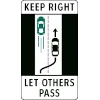 You may have noticed a new version of the familiar highway sign in British Columbia: Keep Right, Let Others Pass.
 Passing lanes are designed to help drivers move safely around slower traffic, but problems can arise when a pass is not completed before the lane ends. A BC court case provides an important lesson about cooperation, awareness, and avoiding a collision when two lanes become one.
 Question: I was asked about not crossing a double solid yellow line when driving. Two friends were talking about it and thought there had been an update made to the laws that allowed a driver to cross a double line under certain circumstances. Was this true?
 Question: After I have turned left onto a street that has 2 lanes of travel for my direction, how far do I have to drive before I can change into the right lane? I recently had a situation where a driver turning right on red nearly hit me when I tried to move over. Who is at fault?
 Effective in November 2018, commercial trucks were forbidden to use the leftmost lane on the Coquihalla Highway between Box Canyon and Zopkios. The aim of the pilot project was to keep "spun out" trucks on the right side of the highway and the left lane clear for snow removal equipment and tow trucks. The project has been expanded.