
 Deciding to stop driving is one of the most emotionally charged choices a family will ever face. For senior drivers, a driver’s license represents a lifetime of freedom and independence. For their adult children, watching a parent’s driving skills decline brings deep worry, stress, and a fear for public safety.
The reality is something we must all face: statistical research shows that the average male will outlive his driving lifespan by 7 years, and the average female by 10 years. Planning for driving retirement before a crisis occurs can protect your safety, your finances, and your peace of mind.
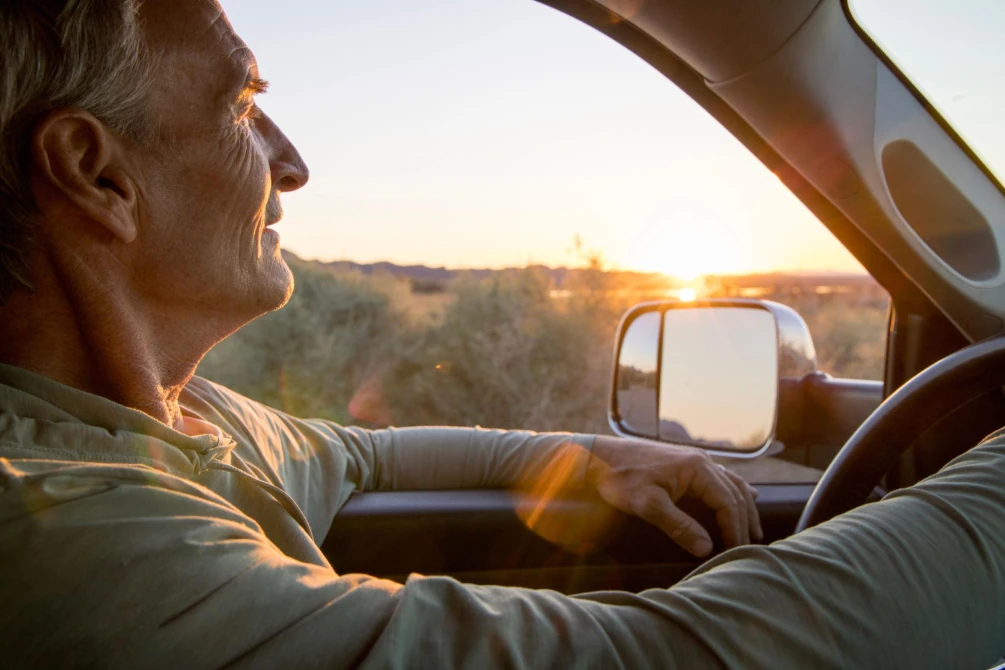
Choosing when to retire from the road ensures your final miles are safe and on your own terms.
Part 1: For Senior Drivers – Recognizing the Signs
Aging affects everyone differently, and getting older does not automatically mean you need to hand over your keys. However, safe driving requires sharp vision, quick reflexes, and strong focus.
Ask yourself if you have experienced any of these recent warning signs:
- Feeling anxious or angry while driving in heavy traffic or at night.
- Finding new dents or scrapes on your vehicle that you cannot quite explain.
- Missing traffic signals, stop signs, or exit ramps on routes you know well.
- Slower reaction times when a car brakes suddenly in front of you.
- Hearing concerns from passengers, family members, or friends about your driving.
Acknowledging these signs is not a sign of weakness; it is an act of responsible citizenship.
The Midpoint: Considering a "Gradual Retirement"
Retiring from the road does not always have to happen overnight. If you aren't ready to give up your license completely, consider reducing your risk profile by self-restricting your driving habits. You can choose to:
- Drive only during daylight hours to minimize night-vision strain.
- Avoid major highways and rush-hour gridlock by taking familiar back roads.
- Plan trips only in ideal weather conditions, staying home during heavy B.C. rains or winter conditions.
Part 2: For Adult Children – How to Start the Conversation
If you are worried about a parent’s safety on the road, bringing it up can feel incredibly daunting. Avoid an aggressive approach, which often leads to defensiveness. Instead, try these steps:
- Use "I" statements: Say "I felt a bit nervous when we merged onto the highway today," rather than "You are getting too dangerous on the highway."
- Focus on specific events: Base the conversation on concrete facts—like a recent close call or a medical diagnosis—rather than general assumptions about age.
- Involve a neutral professional: Ask their family doctor to discuss driving safety, or suggest an evaluation with a driving school. This removes the conflict from your personal relationship.
- Be a partner, not a judge: Frame the transition as a new chapter of life to plan together. Consider establishing a framework like an Advanced Driving Directive before health changes make the conversation difficult.
Debunking the Rumors: You may have seen alarming claims on social media suggesting that new Canadian driving regulations will automatically suspend or ban senior licenses based strictly on age. This is entirely false. In British Columbia, your right to hold a driver's license is evaluated solely on your physical and cognitive ability to operate a vehicle safely—not a number on a calendar.
Navigating the B.C. Driver Medical Examination Report (DMER)
In British Columbia, age 80 is a major milestone for drivers. This is when RoadSafetyBC automatically issues a Driver Medical Examination Report (DMER), which must be completed by a doctor. If you or your parent receives this form, do not panic. It is not an automatic license cancellation—it is simply a routine screening designed to keep independent drivers safe while identifying medical conditions that require an ICBC Enhanced Road Assessment.
A Note on Reporting Unsafe Drivers: If a loved one completely refuses to step away from the wheel despite clear danger, RoadSafetyBC does accept reports from family members or doctors with direct knowledge of the situation. Keep in mind that anonymous reports are not accepted—you must identify yourself so RoadSafetyBC can verify the information, and the driver has a legal right to request a copy of their file.
The Proactive Choice: Choosing Safety Over Crisis
Retiring from driving voluntarily is empowering. Consider the perspective of a British Columbia senior who chose to step away from the wheel after a medical scare. Despite passing his official road assessments, he realized the stakes were too high.
By choosing to stop driving on his own terms, he eliminated the legal and financial liabilities of a potential crash. More importantly, he took the emotional burden off his children and gained immense peace of mind.
Life After Driving: Freedom Without the Car
Many people resist giving up their license because they fear isolation. However, in British Columbia, transitioning away from vehicle ownership opens up significant financial freedom. Think about the immediate savings from eliminating:
- ICBC insurance premiums
- Rising fuel costs and monthly parking fees
- Routine maintenance, tire changes, and unexpected repair bills
By redirecting these thousands of dollars each year, you can comfortably afford alternative transportation. Regional transit, taxi services, community shuttles, and ride-sharing apps can keep you fully connected to your community—without the stress of sitting behind the wheel.
Official B.C. Resources & Support
If you or a loved one are preparing for driving retirement, use these official services to plan a smooth transition:
- ICBC – Learn how to claim your free BCID card when surrendering a driver's license.
- HealthLink BC: Healthy Aging & Driving – A health-focused guide on how medical conditions affect driving safety.
- ICBC Enhanced Road Assessment Details – The official breakdown of what happens during a senior driving review.
- Check out bc211 Seniors on the Move or dial 2-1-1 to locate volunteer driving programs and local community shuttles in your area.
Help Support Other Families
Navigating the transition away from driving is a challenge that many seniors and families face every day. If you found these tips helpful, please take a moment to share this guide with your community.
Use the sharing buttons below to pass this article along to friends, family members, or senior support groups who might benefit from this advice.
- Log in to post comments
Comments
As an individual who spent over 40 years in the driver education and training field, I must applaud the article that was included on Senior Drivers. It covered the social issues of rural transportation, seniors' isolation and how public safety is compromised by the inadequacies of the DMER approach. I am going to turn 79 this year and next year I will enter this process.
Dr. Hildebrand's comments are particularly relevant in this regard. I remember personally listening to him over the years. We disregard the research at our peril.
I took part in a previous iteration of seniors' driver testing, i.e. doing actual road tests on individuals who had a negative DMER report and failed the computerized hazard recognition test. This was a scary process for our staff as most of those individuals truly did not have the necessary physical and mental skills for safe control of their vehicles.
This is a societal issue where we have created a right to drive without adequate safety limitations. It should not be based just on age. We should have a driver review every 5 years and re-test everyone whose record is inadequate or exhibits irresponsible behaviours. Then we could build an expectation of positive performance over the years.
However, this will require our politicians, bureaucrats and insurance administrators to accept responsibility and accountability for maintaining these standards. Otherwise, tragedies will continue to occur, and our health care system and families will continue to bear the burden of our lackadaisical approach to public safety.
I used to ask Ministers of the Crown how high the body count had to go before they would take action. they usually were offended, but I rest my case. Safety just isn't a priority until they are personally impacted.
- Log in to post comments
I have always admired my parents, particularly my mother, for making the decision to voluntarily giving up license, before the choice was taken away from them. Hope this daughter is as smart! Time will tell...
Dad’s health started to decline and when he had a car accident which could have caused injury to a young lady, he decided it was time.
Mum always hated driving (I never knew this) so after Dad passed away and she moved into a condo, she purchased within walking distance of her Doctor and shopping. When she was going to turn 80, she told us “I am giving up my license and selling the car on my 80th birthday”. And she did. It was her present to herself. She lived to age 92, never regretted her decision. Walked every where and the family rallied around her and took her shopping for heavy stuff.
At 75, not sure I will be ready to give up driving at 80, but then who knows. Traffic is getting so much worse and have to admit I find myself a bit more nervous on the roads, so time will tell if I will be a smart daughter!
- Log in to post comments
My Experience