
If you come to British Columbia to study, you may be able to drive using a valid driver's licence issued in your home jurisdiction while you are registered as a full-time student at and attending a qualifying educational institution.
The rules for students differ from those for ordinary visitors and people who move to BC. There are also separate requirements for bringing a vehicle from another jurisdiction.
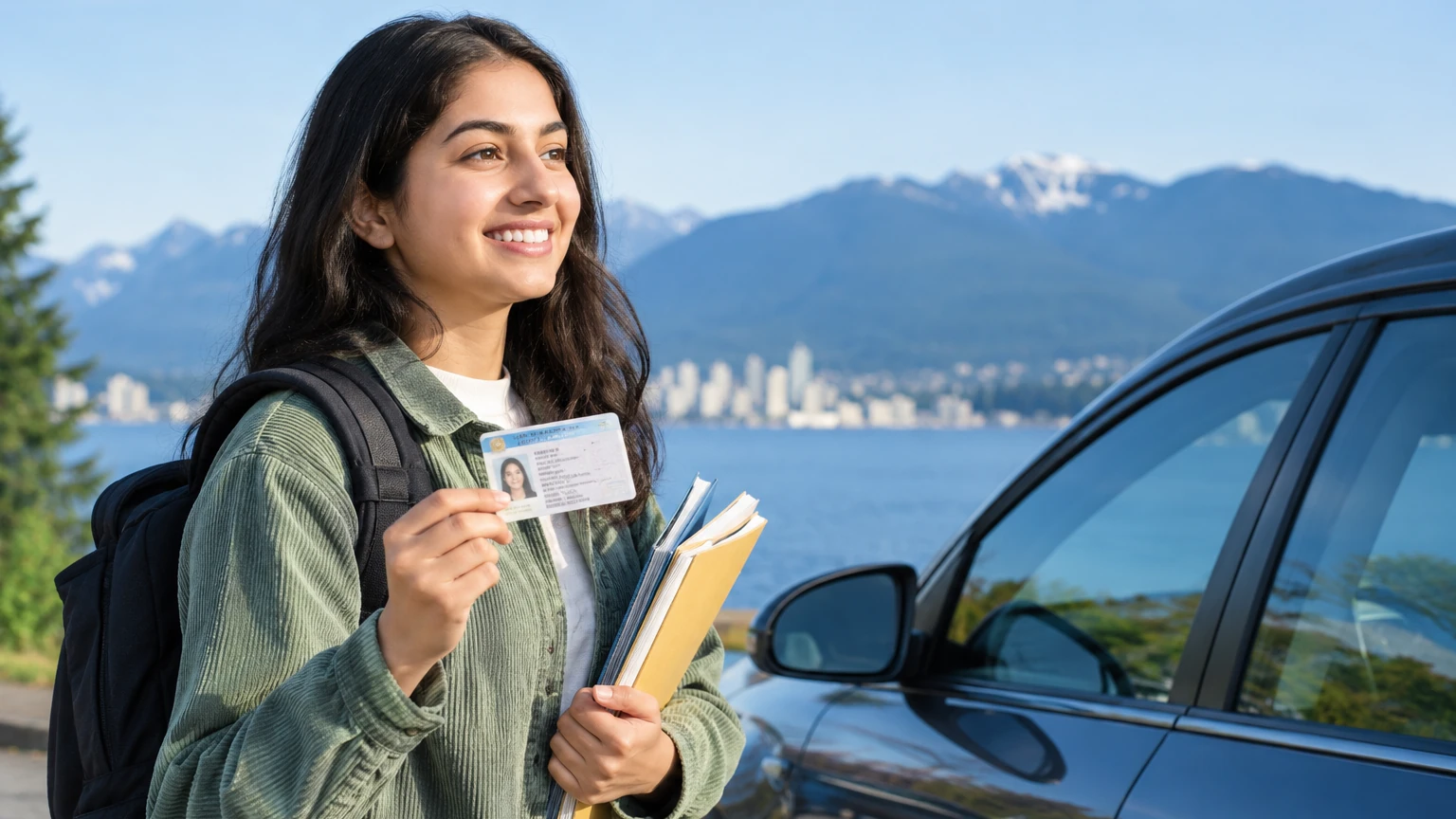
Can I drive in BC using my foreign driver's licence?
Yes, if you qualify for the student exemption. Under section 34(1.1)(c) of the Motor Vehicle Act, a person with a valid driver's licence issued by the jurisdiction where they are ordinarily resident is exempt from holding a BC driver's licence while registered as a full-time student at and attending a qualifying educational institution.
RoadSafetyBC confirms that eligible foreign and out-of-province students can drive with a valid licence from their home jurisdiction for longer than the usual six-month visitor period.
You must carry your valid driver's licence when driving and produce it to a peace officer on demand, as required by section 34(1.2) of the Motor Vehicle Act. RoadSafetyBC also advises visiting students to carry their student identification to show police that they are registered as full-time students at a recognized institution. Your licence must remain valid, and any restrictions on it continue to apply in BC.
Not every educational institution or program qualifies. The following section explains which institutions are covered by the legislation.
Which educational institutions qualify?
Section 21(2)(b) of the Motor Vehicle Act identifies the educational institutions relevant to the student exemption. The categories include:
- Universities: Universities as defined in BC's University Act.
- Colleges and institutes: Institutions as defined in the College and Institute Act.
- University of Northern British Columbia: Specifically included in the legislation.
- Thompson Rivers University: Specifically included in the legislation.
- Royal Roads University: Specifically included in the legislation.
- Other educational institutions in British Columbia that are authorized under an enactment to grant degrees, or designated under section 3(1)(a) of the federal Canada Student Financial Assistance Act.
These are statutory categories, not a complete list of every institution by its current name. Whether a particular school qualifies depends on the legislation governing it and, where applicable, its designation under federal student financial assistance legislation.
If you attend a private college, language school or other specialized educational institution, do not assume that full-time enrolment alone qualifies you for the exemption. Confirm your eligibility with ICBC before driving.
What if I do not qualify for the student exemption?
If you are visiting BC and do not qualify for a special exemption, you can generally drive for up to six months using a valid foreign or out-of-province driver's licence. The period is calculated from your most recent entry into BC.
If you become a BC resident, you generally have 90 days to switch to a BC driver's licence. The rules depend on your circumstances, so do not assume that being enrolled in a school automatically qualifies you for the student exemption.
For more information, see ICBC's guidance for people moving to BC from outside Canada.
What happens if police stop me?
If you qualify for the student exemption, carry your valid driver's licence and student identification so that you can demonstrate your eligibility.
RoadSafetyBC explains that driving without a valid licence can have consequences beyond receiving a ticket:
- First offence: Police will issue a violation ticket and will not permit you to continue driving.
- Second offence: Police will impound the vehicle you are driving for seven days, even if you do not own it, and prohibit you from driving until you have a valid BC driver's licence, meet all licensing requirements and pay your fines.
- Driving while prohibited: Continuing to drive while prohibited can result in a separate offence. A first conviction for driving while prohibited carries a $500 to $2000 fine and may result in imprisonment for up to six months.
These consequences concern unlicensed driving or driving while prohibited, not simply forgetting to carry student identification. The circumstances of an individual case matter.
See RoadSafetyBC's guidance on driving without a valid driver's licence for further information.
Can I bring my own vehicle to BC?
Being permitted to drive using a foreign or out-of-province licence does not automatically exempt your vehicle from BC's registration and insurance requirements.
ICBC offers a separate vehicle exemption for eligible full-time students attending a recognized BC post-secondary institution or a qualifying Government of Canada-designated educational institution. The vehicle must be properly registered, licensed and insured in Canada or the United States.
You must apply within 30 days of arriving in BC and obtain approval. Supporting documents include proof of full-time enrolment, vehicle registration and proof of insurance. Once approved, you must keep the exemption permit in your vehicle.
This vehicle exemption is separate from the driver's licence exemption. Qualifying for one does not automatically mean that you qualify for the other.
For application details and current requirements, see ICBC's information about insurance and vehicle exemptions for students, military personnel and tourists.
Where can I confirm my eligibility?
The most important consideration is whether your educational institution falls within one of the categories specified in section 21(2)(b) of the Motor Vehicle Act. If you are uncertain, contact ICBC before driving rather than relying on the institution's description of its programs.
You can also consult RoadSafetyBC's guidance on driving without a valid driver's licence for the provincial government's explanation of the student exemption.
Before driving, make sure that your licence is valid, that you qualify for any exemption you rely on, and that the vehicle you are using is properly registered and insured.
Learn More
- Log in to post comments