
Have you ever wondered why we have so many traffic rules? There are rules about where you drive, how fast you drive, who goes first, where you stop and even when you are allowed to turn.
It can sometimes seem as though the rules exist simply to give police something to enforce. That is not their purpose.
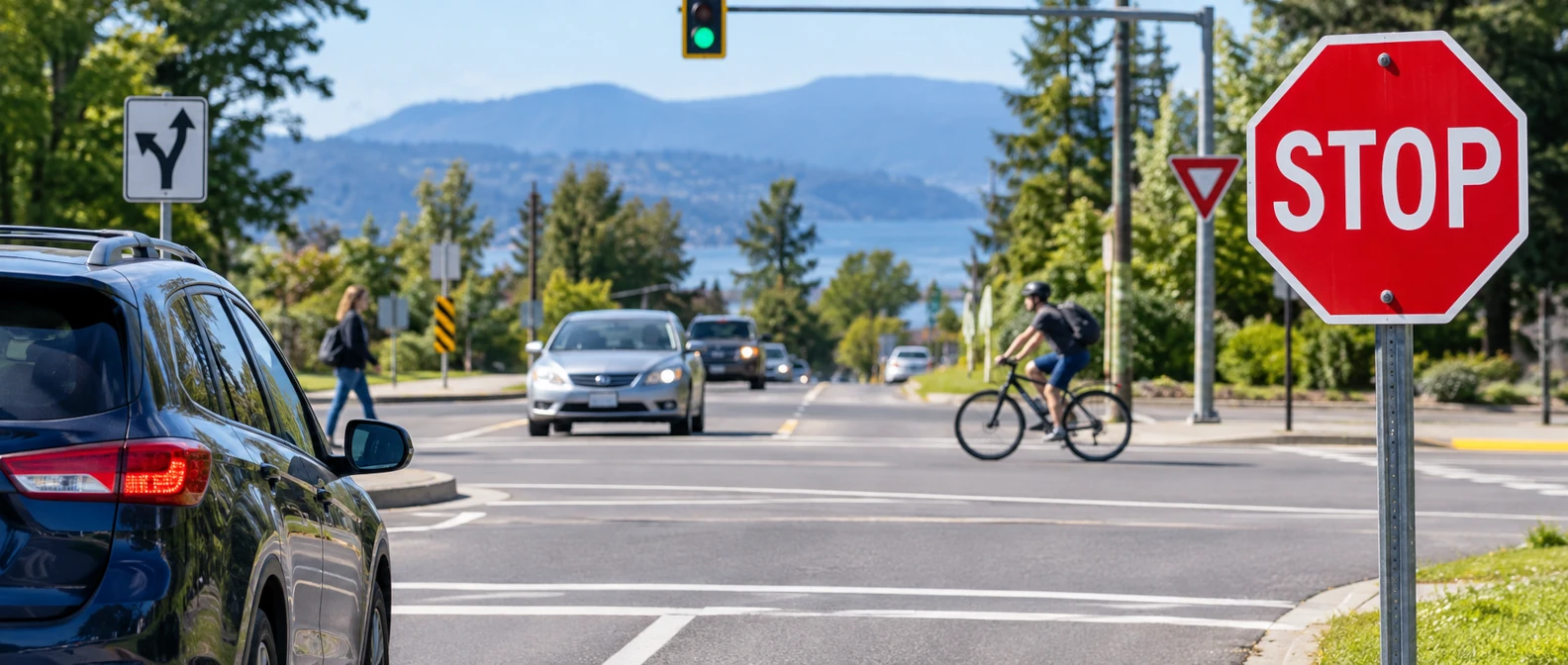
Predictability is the key
Roads are shared spaces. Every driver, cyclist and pedestrian is making decisions based on what they expect everyone else to do.
Imagine approaching an intersection where there are no stop signs, yield signs, traffic signals or other rules. You might slow down and look to see what the other drivers are going to do. The driver approaching from the other direction would be doing the same thing. Each person would have to guess what everyone else intended to do.
Traffic rules remove much of that uncertainty. A red light means stop. A yield sign tells you that another road user has priority. A stop sign establishes who must stop and when. Keeping to the right and passing on the left gives drivers a predictable way to share the road.
The rules do not eliminate the need for drivers to pay attention. They give us a common set of expectations so that we don't have to negotiate every interaction from scratch.
Rules help prevent conflicts
Many traffic rules exist because two or more road users could otherwise arrive at the same place at the same time.
Right-of-way rules are a good example. They do not give anyone a licence to proceed without looking. They establish who should normally proceed first so that everyone involved can make a predictable decision.
Speed limits serve a different but related purpose. They establish a maximum speed appropriate to the circumstances of the road, while leaving drivers responsible for choosing a safe speed for the conditions. The faster a vehicle is travelling, the less time the driver has to react and the more severe the consequences can be when something goes wrong.
Following-distance rules and laws against distracted or impaired driving address other ways that a driver's actions can interfere with the ability of others to use the road safely.
What happens when the rules are ignored?
During my years in traffic enforcement, I saw many examples of drivers treating traffic rules as suggestions rather than requirements. Sometimes nothing happened. The driver broke the rule and continued on their way.
The problem is that the risk is not always apparent at the time. A driver who runs a red light may get through the intersection without consequence. The driver who follows too closely may not collide with the vehicle ahead. The person who drives too fast may arrive at their destination without incident.
That does not mean the behaviour was safe. It means that the undesirable outcome did not happen that time.
Traffic rules are intended to reduce the number of opportunities for those conflicts to occur and to reduce the consequences when they do.
Rules are about more than enforcement
Police enforce traffic laws, but enforcement is only one part of the system. Rules work best when road users understand them, accept the reasons for them and follow them without needing a police officer to be present.
In fact, most of the time we drive safely because we expect other people to follow the rules. We stop at red lights because we expect cross traffic to have a green light. We stay in our lane because we expect approaching traffic to remain in theirs. We yield because we expect the other road user to proceed when they have priority.
That mutual expectation is what makes a busy road system work.
The choice is yours
Traffic rules cannot guarantee that a collision will never happen. They cannot compensate for every mistake, poor decision or unexpected event.
They can, however, give millions of people using the same roads a common set of expectations about what everyone else is going to do.
When you choose to ignore a traffic rule, you are not making that choice in isolation. You are changing the expectations that other road users rely on, and you may be creating a risk for someone who has no opportunity to consent to it.
That is why we have traffic rules.
Learn More
- Log in to post comments