Prepare to Stop When Lights are Flashing
 Kate asks “When your light is green at the intersection ahead but above you the advanced yellow overhead warning lights have begun to flash, should you be preparing to stop for that green light?”

Information related to stopping.
Kate asks “When your light is green at the intersection ahead but above you the advanced yellow overhead warning lights have begun to flash, should you be preparing to stop for that green light?”
 We've all seen it and I'll bet that we all talk about them, drivers who race us to the next red light. Here they come, weaving through traffic, going over the speed limit and pass by us just in time to stop for the same red light that we do. These drivers put us all at risk to gain nothing and demonstrate their inability to plan ahead.
 This case decides the liability for a collision at the intersection of 184th Street and 40th Avenue in Surrey. Was the collision caused by a driver cutting corners or a driver failing to stop at the stop sign? Madam Justice Forth makes the decision.
 Question: A pedestrian was on the sidewalk mid block and an approaching driver stopped to allow the pedestrian to jay walk. The car in the adjacent lane behind this driver stopped abruptly and almost caused a collision because the car following that vehicle was not expecting the stop. Should the second car have stopped or just kept going?
 Here's an interesting question from the DriveSmartBC inbox: There is a mid-block pedestrian controlled traffic light in our neighborhood. Drivers frequently stop and then proceed through it if no one is in the crosswalk. Is this legal?
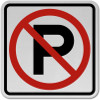 Parking, stopping or standing, what's the difference and why is it important to you as a driver? Recognizing these road signs and knowing what is allowed and what isn't with regard to these three situations can mean the difference between your convenience and being ticketed and towed for ignoring or mistaking them.
 This one surprised me, research that shows it is actually safer for cyclists to slow down and go past a stop sign without stopping instead of coming to a full stop. The US state of Idaho's statute Title 49, Chapter 7 permits it, along with different behaviour at a red light. Cyclists are required to stop and yield, but may proceed on the red if it is safe to do.
 Konho Kim was driving his car on 108 Avenue approaching the 4 way stop at the intersection of 164 Street in Surrey. He stopped and observed a car driven by Megan Levonne approching from his left. Expecting Ms. Levonne to stop, Mr. Kim proceeded to make a right turn. The two vehicles collided in the intersection. This case determines liability for the collision and explores a driver's duty of care in the circumstances.
 If there is a marked stop line at an intersection controlled by a stop sign, drivers (and cyclists) are required to stop at that line. This rule is probably almost universally ignored in favour of stopping in a position where the driver can see cross traffic that would require them to yield. Of course, many drivers choose not to stop at all.
One wouldn't think that stopping at stop signs would be such a problem for drivers. It seems relatively simple, come to a complete stop, look both ways and then go if it is safe to do so. With the poor compliance rate, we should ask is the stop sign the best form of traffic control for intersections that are not controlled by traffic signals?