
Question: What should I do if a vehicle that appears to be a police car signals me to stop, but I am not convinced that it is really a police vehicle?
It is important to take a legitimate police traffic stop seriously, but what if something about the vehicle or the person claiming to be a police officer does not seem right?
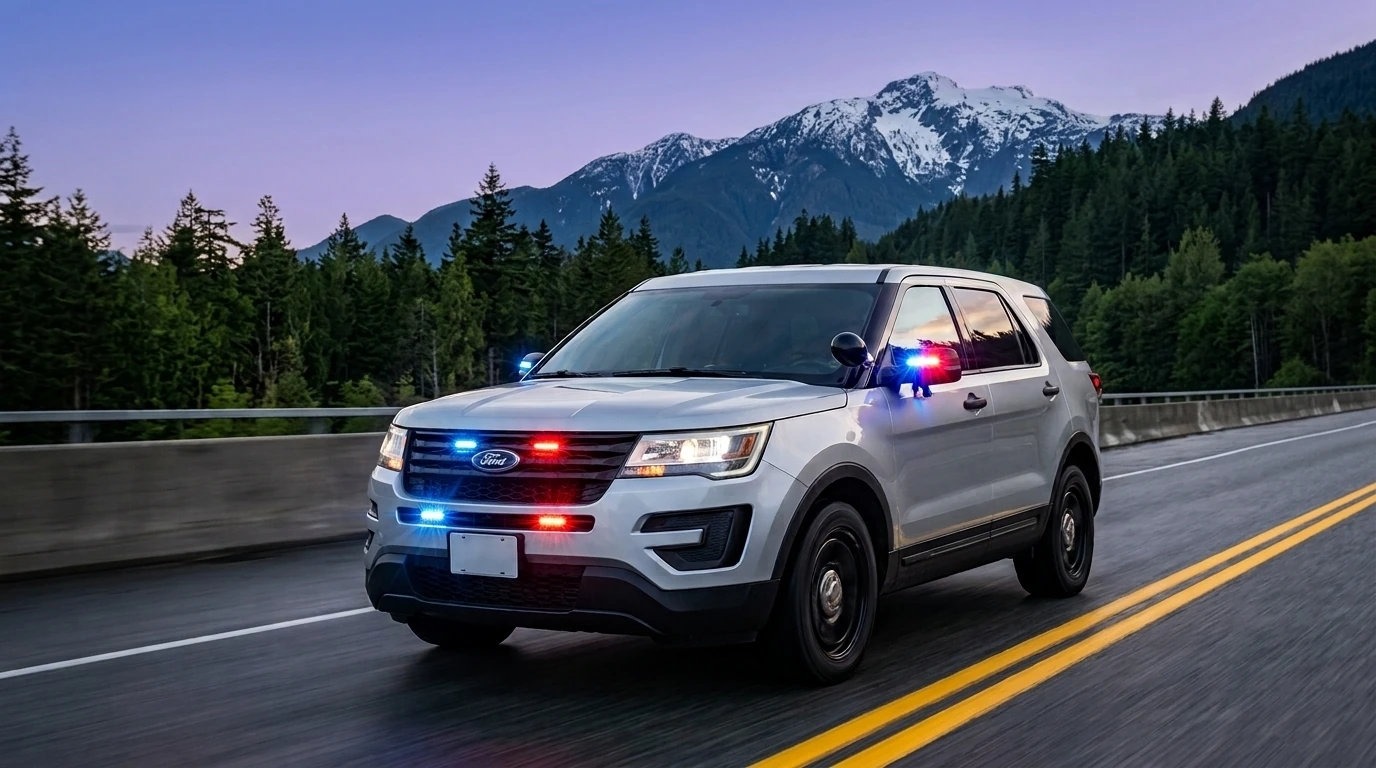
Police officers in British Columbia use both marked and unmarked vehicles. An unmarked vehicle is not, by itself, a reason to believe that a stop is illegitimate. However, if you genuinely believe that you may be dealing with someone impersonating a police officer, you can take reasonable steps to verify the stop.
What should you do?
First, slow down and continue to drive in a safe and predictable manner. If possible, proceed to a nearby well-lit and populated location before stopping.
Do not speed away, make dangerous driving manoeuvres or attempt to evade a vehicle simply because you are uncertain about its identity. Your goal is to find a safe way to verify the stop, not to turn it into a pursuit.
If you cannot safely continue to a populated location, pull over when it is safe to do so. Keep your doors locked and your window only partly open while you determine who is asking you to stop.
If you have a genuine concern about the legitimacy of the stop, call 911. Tell the dispatcher where you are and explain that you are concerned that the person attempting to stop you may not be a police officer. Police dispatch can determine whether an officer is conducting a traffic stop in that area.
You can also tell the person at your window that you are cooperating but that you are contacting police dispatch to verify their identity. A legitimate police officer should understand why you are taking that precaution.
Can you ask to see identification?
Yes. In 2025, North Vancouver RCMP specifically advised the public that police officers carry official badges and photo identification cards displaying their regimental numbers, and that a person who is suspicious of a traffic stop can request to see that identification.
If you remain uncertain, explain your concern and continue communicating with the 911 dispatcher. Follow the dispatcher's instructions rather than trying to determine the situation yourself.
What does the law say?
Section 73 of the Motor Vehicle Act requires a driver to stop when signalled or requested to stop by a peace officer who is readily identifiable as a peace officer. The driver must come to a safe stop and provide their name and address, along with the name and address of the vehicle owner, when requested.
There is also a federal criminal offence that deals directly with police impersonation. Section 130 of the Criminal Code makes it an offence to falsely represent yourself as a peace officer or to use a badge, uniform or equipment in a way that is likely to cause people to believe that you are a peace officer.
Police impersonation is not just a theoretical concern. In March 2025, North Vancouver RCMP investigated a man who allegedly stopped a driver while identifying himself as a police officer and using lights resembling emergency vehicle lights. Charges of personating a peace officer and using equipment likely to cause the public to believe he was a peace officer were subsequently approved.
Trust your instincts, but stay safe
A police vehicle that does not look the way you expect it to is not necessarily an impostor. Police legitimately use unmarked vehicles, and those vehicles can vary considerably in appearance.
On the other hand, you do not have to ignore a genuine concern about your safety simply because the person behind the wheel claims to be a police officer. Slow down, avoid dangerous driving, move to a safe location when practical, and use 911 to verify a suspicious traffic stop.
The safest approach is to cooperate while taking reasonable steps to establish that the person stopping you really is a police officer.
Learn More
- Log in to post comments