
 When British Columbia drivers see a pilot car with flashing amber lights, it is an immediate warning that an oversize, slow-moving, or extra-wide commercial load is nearby. Navigating safely around these escorts requires exercising extreme caution and being prepared to yield the right-of-way, regardless of where you are driving in the province.
Essential Rules for Driving Around Pilot Cars
1. Acknowledge the Lead Vehicle
Pilot cars will use their headlights, four-way hazard flashers, or horns to get your attention. When you see an oncoming pilot car, you should immediately turn on your own four-way hazard lights. This signals to the pilot car operator and the transport truck driver behind them that you have recognized the hazard and are preparing to react.
2. Reduce Speed and Prepare to Yield
Do not maintain your current speed when approaching an oversize load. Slow down significantly and prepare to move toward the shoulder of the road if necessary. Oversize loads often require extra lane space to clear curves, intersections, or upcoming hazards, meaning you may need to yield the right-of-way entirely.
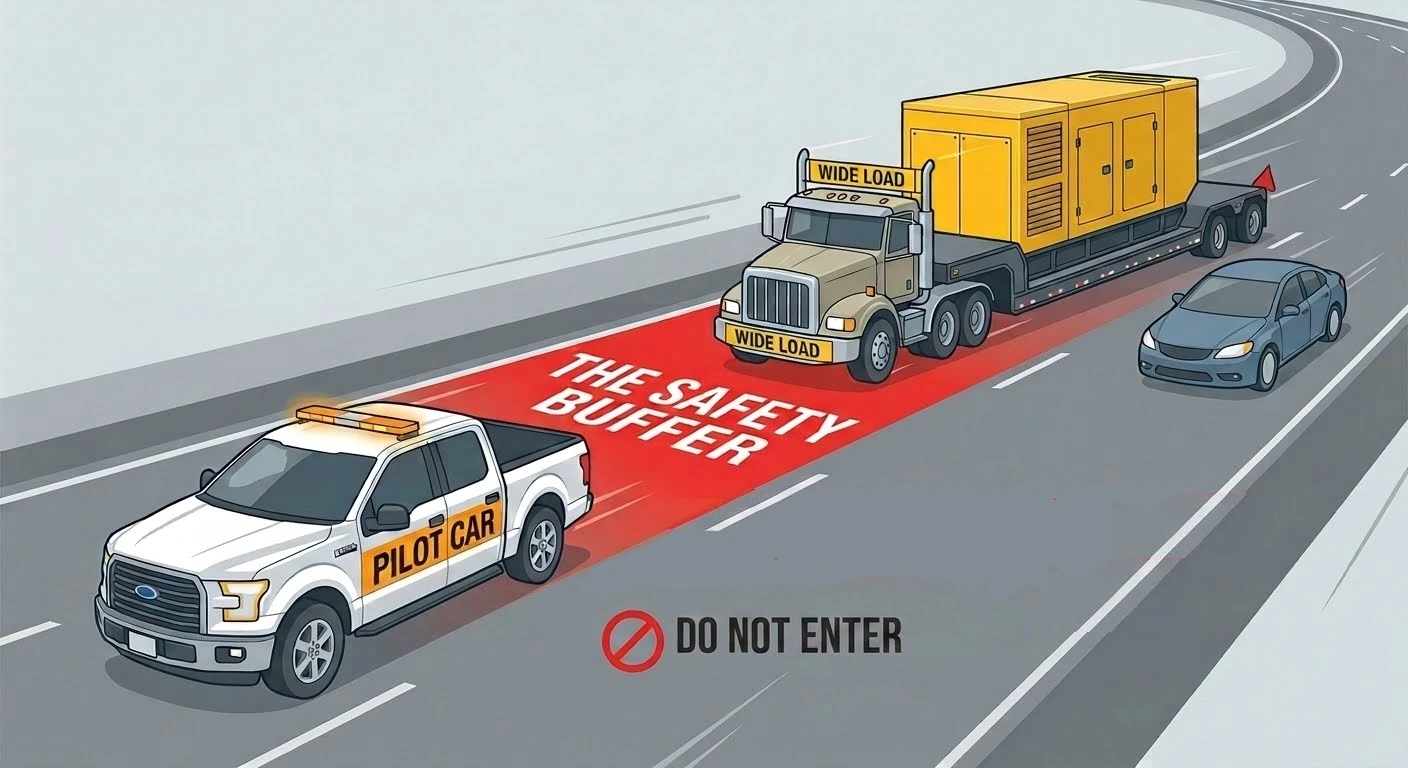
3. Respect the Safety Buffer Zone
The space between a pilot car and the oversize load it is escorting is a designated safety buffer. Never attempt to pull into, tailgate, or pass within this gap. Cutting into this space isolates the escort vehicle from the load and creates a high risk of a collision if the transport truck has to brake suddenly.
4. Understand Intentional Lane Blocking
If a pilot car appears to be straddling two lanes or blocking an open lane, it is not being rude. The operator is intentionally preventing public traffic from passing because the oversize load needs both lanes to safely navigate an upcoming hazard, sharp turn, or narrow road structure. Stay back and do not attempt to bypass the pilot car.
5. Stay Out of Blind Spots
Avoid driving or lingering directly at the rear corners of either the pilot car or the oversize load. Large commercial vehicles have massive blind spots. If you cannot see the transport truck's side mirrors, the driver cannot see your vehicle.
6. Pass Only When Guided or Completely Safe
Never rush to overtake a pilot car that is actively maneuvering around its load. On two-lane highways, wait for a designated, safe passing area. On multi-lane highways, only pass once the pilot car signals, drops back behind the load, and a clear path of travel is completely visible. Ensure you can see the transport truck's headlights in your rearview mirror before pulling back into the lane.
Legal Authority and Enforcement
Under British Columbia's Motor Vehicle Act, a pilot car operator acts as a certified traffic control person while escorting an overdimensional load. This gives them the legal authority to direct public traffic according to the provincial BC Pilot Car Load Movement Guidelines.
If the operator extends an official, handheld "STOP" or "SLOW" paddle out of their driver-side window, you are legally required to obey it. Treat this window paddle exactly like a red light or a construction flagger. Failing to obey a traffic control person or device in BC can result in a violation ticket, carry heavy fines, and add penalty points to your driving record.
Help keep our roads safe for everyone. If you found these tips useful, please click the share buttons below to pass them along to other BC drivers.
- Log in to post comments